

Culture and Remembrance Days 2026 in Berlin: Programme
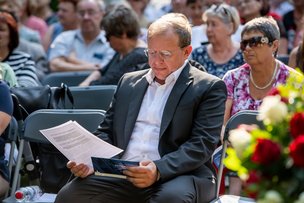
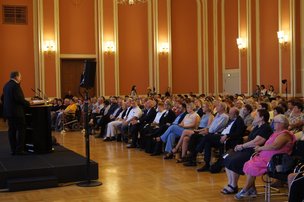
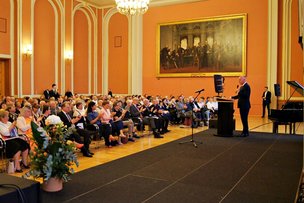
From August 22 to September 5, Berlin will once again host a series of collective remembrance events dedicated to the complex history of Russian Germans, late repatriates, forcibly displaced persons, and refugees.
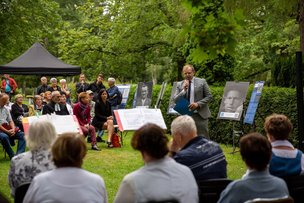
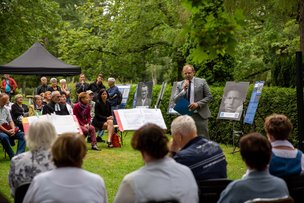
For the first time, a similar initiative was held in the capital last year (August 23 – 29), at the initiative of Walter Gauks, the Berlin Senate Commissioner for Russian Germans, late repatriates, and forcibly displaced persons, who also coordinated the practical implementation of the events under the eloquent and meaningful motto: «80 Years Since the End of the War – The Fate of Postwar Generations».
The aforementioned 2025 initiative demonstrated its considerable social importance and relevance, receiving high praise from the general public and representatives of various branches and levels of government of the federal state of Berlin. This quite naturally and fairly determined that similar events should be held again this year.
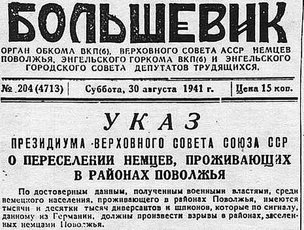
Once again, they will provide a fully accurate reminder of the tragic events of the Second World War and their catastrophic consequences for the aforementioned population groups, manifested in their deportations, forced expulsion from their customary places of residence, and overt discrimination against them. Objectively, this deprived most of them of their spiritual support, severed the roots of their unique cultural identity, and undermined the “core” identity they had developed over many years.
Moreover, the forthcoming events are intended to highlight current issues related to the consequences of this historical period for the affected population groups, while fully examining the potential prospects for their further integration into modern society and recognizing the inevitable challenges of this process.
There is a clear rationale for this: despite the historical differences between these population groups, they are currently united by common systemic problems. These are most acute in matters concerning legal and social status, access to the labor market, and the reliable provision of a decent standard of living in old age. These barriers prevent the full integration of these citizens into society and, for now, do not allow their potential to be used effectively and to its full extent for the common good.
Participation in the 2026 commemorative events will serve as a visible expression of civic engagement, social responsibility, and intergenerational continuity. It is a platform for constructive and respectful dialogue, where reflection on historical experience helps shape a shared vision of today’s pressing tasks and their priorities.
Coordination of cooperation in organizing the 2026 events is provided by the office of the Berlin Senate Commissioner for Russian Germans, late repatriates, and forcibly displaced persons.
Calendar of Main Events
The 2026 “Days of Culture and Remembrance” in Berlin
Grand opening. Festival: “Stronger Together.”
August 22 (An der Urania 17, starting at 5:00 p.m.).
Special tour — visit to the Marienfelde emergency accommodation center.
August 25 (from 2:00 p.m. to 3:15 p.m., Marienfelder Allee 66/80).
Presentation of Alexander Pfohl’s book at the Bröhan Museum.
August 25 (Bröhan-Museum, Schloßstraße 1a, starting at 6:00 p.m.).
Special tour — “Forced Displacement, Expulsion, Reconciliation.”
August 27 (Dokumentationszentrum Flucht, Vertreibung, Versöhnung, Stresemannstraße 90, starting at 12:30 p.m.).
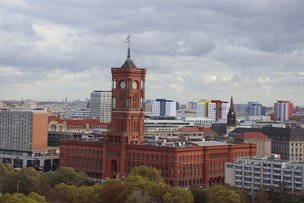
“Day of Shared Remembrance” at Berlin’s Red Town Hall.
August 28 (Rathausstraße 15, starting at 12:30 p.m.).
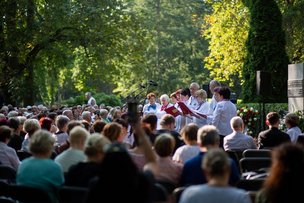
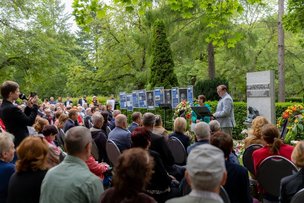
Wreath-laying ceremony at the “Memorial Stone to the Victims of Deportation” on the grounds of the park cemetery in the Marzahn administrative district.
August 28 (Parkfriedhof Marzahn, Wiesenburger Weg 10, 12681 Berlin-Marzahn, starting at 4:00 p.m.).
“Day of Remembrance and Encounters” at the Gemeinschaftshaus Lichtenrade community center.
August 29 (Lichtenrader Damm 212, starting at 3:00 p.m.).
“Cultural Exchange” at Spandau Citadel.
August 30 (Am Juliusturm 64, from 11:00 a.m. to 2:00 p.m.).
Special tour — visit to the Marienfelde emergency accommodation center.
August 30 (from 2:00 p.m. to 3:15 p.m., Marienfelder Allee 66/80).
Special tour — “Forced Displacement, Expulsion, Reconciliation.”
September 1 (Dokumentationszentrum Flucht, Vertreibung, Versöhnung, Stresemannstraße 90, starting at 12:30 p.m.).
“Live podcast” (a live online broadcast) related to the Berlin Wall and its history, specifically at Site X3, which is part of this memorial complex.
September 2 (Bernauer Straße 111, gathering at 5:30 p.m., starting at 6:00 p.m.).
Public forum on the topic: “Do We Need a New Narrative about Russian Germans?” Berlin State Center for Civic Education.
September 3 (Berliner Landeszentrale für politische Bildung, Hardenbergstraße 22–24). Starts at 6:30 p.m.
Citywide “Youth Day.” At several venues across the capital.
September 4 from 11:00 a.m. to 3:00 p.m. and from 7:00 p.m.
“Homeland Day” with the laying of flowers and wreaths.
September 5: at 12:00 p.m. — French Church of Friedrichstadt (Französische Friedrichstadtkirche, Gendarmenmarkt 5); at 3:30 p.m. — Theodor Heuss Square (Theodor-Heuss-Platz).
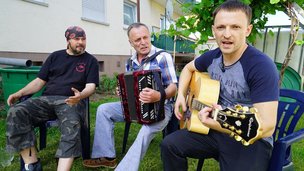
From August 22 to September 5, traveling exhibitions presented by the Bayerisches Kulturzentrum der Deutschen aus Russland (BKDR) will be displayed at various events of the “Days of Culture and Remembrance” in Berlin.
IMPORTANT
Advance registration is required to participate in the aforementioned special tours. Admission to some events is by invitation only. Certain program details may be subject to change.
Registration and further information: aprdsv@intmig.berlin.de
When registering, please provide: the event (title and date), surname, first name, organization (if applicable), and the number of accompanying persons.
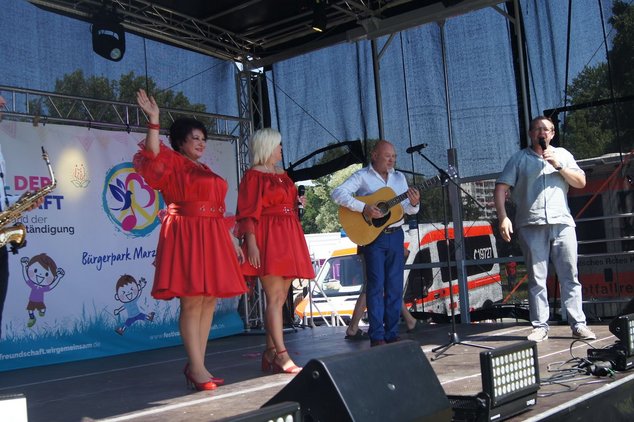
Photos from the archive of the Berlin Senate Commissioner for Russian Germans,
late repatriates, and forcibly displaced persons
Tags: deportation of Russian Germans, history of Russian Germans, Russian Germans in Germany, Russian Germans in Siberia, Russian Germans, Walter Gauks, Russian Germans Berlin forum, Russian Germans in Berlin, Commemoration Evening in Berlin, commemorative events in Berlin, Parkfriedhof Marzahn, commemorative events in Germany, late resettlers, integration of Russian Germans, Days of Culture and Remembrance 2026, Days of Remembrance in Berlin, culture of remembrance in Germany, forcibly displaced persons, the fate of Russian Germans, consequences of World War II, forced displacement, integration of late resettlers, Day of Shared Remembrance, Day of Remembrance and Reunion, cultural exchange in Berlin, remembrance events in Berlin, commemorative events 2026, Marienfelde camp, Berlin City Hall, Spandau Citadel, history of resettlers in Germany, cultural identity of Russian Germans, public dialogue in Berlin, culture and remembrance in Berlin
Categories: Latest news