

“Days of Culture and Remembrance” 2026 in Berlin
In Berlin, a series of events and activities united under the concise overarching motto «Days of Culture and Remembrance» (22 August – 5 September) has come to an end. The programme was dedicated to Russian Germans, late repatriates and forcibly displaced persons.
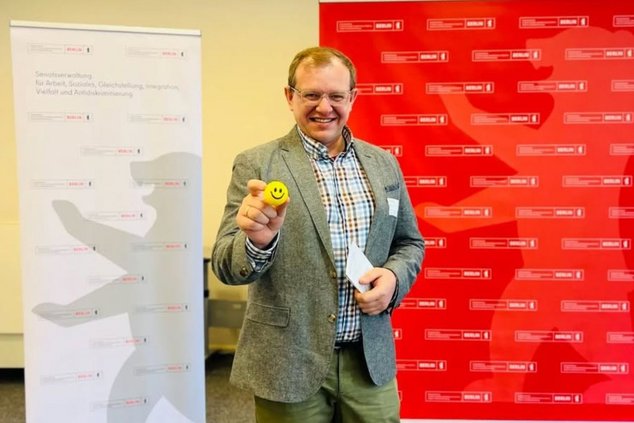
In essence, this was a logical and dynamic continuation of the project launched in the capital last year (from 23 to 29 August) at the initiative of Walter Gauks, the Commissioner of the Senate of Berlin for Russian Germans, late repatriates and forcibly displaced persons (Walter Gauks).
It should be acknowledged that the 2025 initiative demonstrated considerable social significance and earned the approval of the general public, as well as of the legislative and executive authorities of the federal state of Berlin. Ultimately, this determined the organisation of similar events this year as well.
Taking into account the experience gained and the comprehensive improvements implemented by the office of the Commissioner of the Senate of Berlin for Russian Germans, late repatriates and forcibly displaced persons, the 2026 programme of the «Days of Culture and Remembrance» was substantially expanded on the basis of a detailed revision and a deeper objective assessment of similar events held in previous years.
In particular, special emphasis was placed on organising and holding thematic discussion forums, interactive exhibitions and specialised tours related to the preservation of historical memory, continuity between generations and the cultural diversity of the aforementioned population groups.
One of the key objectives of the «Days of Culture and Remembrance» is, wherever possible, to present the history of different generations of Russian Germans, late repatriates and forcibly displaced persons in the most comprehensive, accessible and evidence-based format, using only reliable sources, and to make it meaningful to the audience. All this takes place in an atmosphere conducive to recollection, discussion and an understanding of the authenticity of those events.
The success of this year’s «Days of Culture and Remembrance» was determined by a skilful combination of large-scale events of public significance and intimate thematic gatherings. The balance between major concert programmes and specialised meetings offering in-depth content made it possible to ensure a high level of organisation and substantial programme content.

The major official events included:
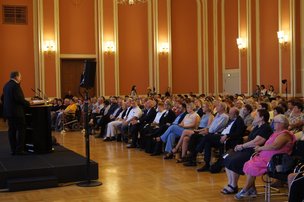
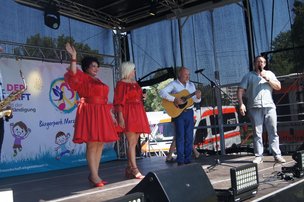
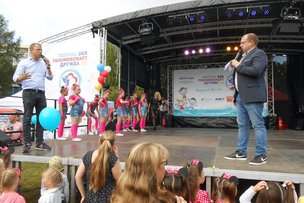
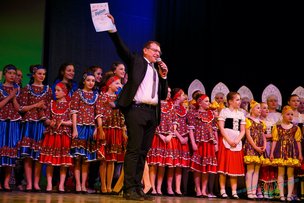
- the official opening ceremony of the 2026 «Days of Culture and Remembrance» and the cultural and creative festival bringing together representatives of different generations of Russian Germans, late repatriates and forcibly displaced persons, «Stronger Together» (22 August, URANIA 17, 10787 Berlin). It is important to note that the high public status of these events was convincingly confirmed by the participation of Dr. Bernd Fabritius, the Federal Government Commissioner for Matters Related to Ethnic German Resettlers and National Minorities (Dr. Bernd Fabritius);
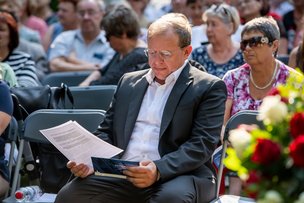
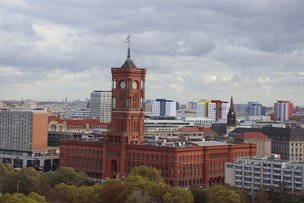
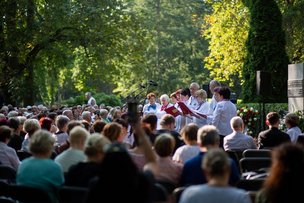
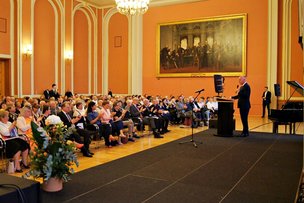
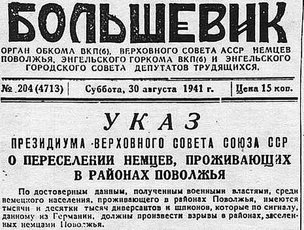
- the «Day of Shared Remembrance» at Berlin’s Red Town Hall (28 August, Rathausstraße 15, 10178 Berlin). Every year on 28 August, a date of collective historical remembrance is commemorated. It holds enduring significance for Russian Germans, late repatriates and forcibly displaced persons who became victims of forced deportation, famine and gruelling labour in the «Labour Army». It is a day of genuine compassion for the tragic ordeals endured by several generations of Soviet Germans, as well as an expression of an unwavering responsibility to preserve their bright memory today. Commemorative events dedicated to this tragic date traditionally take place in many regions of Germany.
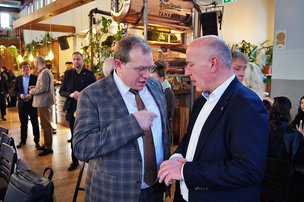
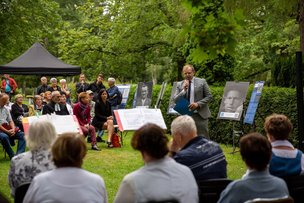
This year’s event at the Red Town Hall was attended by numerous representatives of the capital’s administration at various levels, the clergy, relevant departments and institutions, various foundations, members of the creative intelligentsia, and the leadership of Berlin’s public organisations and associations of Russian Germans, late repatriates and forcibly displaced persons.
This, by and large, is evidence of the responsible approach taken by the Berlin authorities to the integration of Russian Germans, late repatriates and forcibly displaced persons. It demonstrates both continuity in supporting the older generation and a strategic vision of the role of these population groups in the structure of modern Berlin society.
This thesis was also reflected in the speeches of Berlin’s Governing Mayor and Minister-President of the federal state of Berlin, Kai Wegner (Kai Wegner), Berlin Senator for Labour, Social Services, Equality, Integration, Diversity and Anti-Discrimination Cansel Kiziltepe (Cansel Kiziltepe), and the Federal Government Commissioner for Matters Related to Ethnic German Resettlers and National Minorities, Dr. Bernd Fabritius (Dr. Bernd Fabritius);
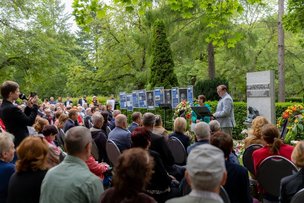
- the traditional solemn wreath- and flower-laying ceremony (28 August) at the memorial diptych on the grounds of the Park Cemetery in the Marzahn administrative district (Parkfriedhof Marzahn, Wiesenburger Weg 10, 12681 Berlin-Marzahn). The sculptural composition includes the «Stone of Homage» — a slab bearing the inscription «To the Germans who suffered under the Stalinist regime in the Soviet Union» — and a bronze figure of an exhausted woman from the «Labour Army», entitled «With Her Last Strength». The monument was erected exclusively with funds collected at the time through the voluntary initiative of Russian Germans.

Summary of the 2026 «Days of Culture and Remembrance» in Berlin
The lives of several generations of Russian Germans, late repatriates and forcibly displaced persons were shaped by complex and tragic historical circumstances. These historical circumstances became key factors in the formation of their distinctive identity and collective memory.
Without public recognition of this fact and the establishment of respectful communication, it is impossible to build полноценное social interaction within society. It was precisely open dialogue about the past, present and future that made it possible to remove barriers caused by misunderstanding and transform historical pain into constructive action — something that was once again convincingly demonstrated during this year’s «Days of Culture and Remembrance» in Berlin.
The practical benefits of such direct dialogue are obvious: it helps identify people’s real needs in the areas of language, culture, education and social protection. Instead of general slogans, specific tasks emerge that can and should be addressed through joint efforts. Common goals become measurable and therefore achievable.
In this context, reflecting on the existing difficulties, formal obstacles and everyday problems, bureaucratic troubles and day-to-day challenges faced by these population groups provides the basis for an objective assessment of their actual position in society.
Despite their historical differences, they share common systemic problems concerning legal and social status, access to employment and the provision of a dignified old age. These «barriers» still largely impede the full integration of Russian Germans, late repatriates and forcibly displaced persons, as well as the realisation of their existing constructive potential.


Photo: Pavel Pass
Tags: deportation of Russian Germans, history of Russian Germans, Russian Germans in Germany, Walter Gauks, Russian Germans in Berlin, Parkfriedhof Marzahn, integration of Russian Germans, Days of Culture and Remembrance 2026, forcibly displaced persons, Day of Shared Remembrance, Rotes Rathaus, Bernd Fabritius, Soviet Germans, Kai Wegner, Cansel Kiziltepe, Red City Hall of Berlin, Days of Culture and Remembrance, Days of Culture and Remembrance Berlin, late resettlers in Germany, late resettlers in Berlin, culture of Russian Germans, remembrance of Russian Germans, deportation of Soviet Germans, labor army, Day of Shared Remembrance of Russian Germans, August 28 Russian Germans, commemorative events for Russian Germans, cultural events for Russian Germans, Stronger Together, Stronger Together Festival, URANIA Berlin, memorial to Russian Germans, Memorial Stone, With Our Last Strength, culture and remembrance, historical memory of Russian Germans
Categories: Latest news