

 Illustration created with the help of AI.
State Program for Resettlement to Russia in 2026
Current requirements for compatriots living abroad, participation procedure, and documents for applicants from Germany
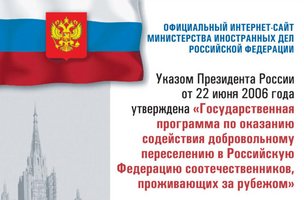
The State Programme to Assist the Voluntary Resettlement to the Russian Federation of Compatriots Living Abroad has been in effect since 2006. It was approved by Russian Presidential Decree No. 637 of June 22, 2006, and has been amended and supplemented several times over the years.
Further significant changes were introduced by Russian Presidential Decree No. 634 of September 8, 2025. Those planning to participate in the State Programme in 2026 should therefore take the updated requirements into account. In particular, the rules for confirming proficiency in Russian, certain provisions for repatriates, and the procedure for information exchange have been clarified.
There are currently two main ways to participate: under the general procedure and as a repatriate.
Key changes in effect in 2026
One of the most important changes concerns how proficiency in Russian is confirmed. Acceptable evidence includes not only an education document for at least basic general education obtained in the territory of a republic that was part of the USSR before September 1, 1991, but also an education document, or a document certifying education and qualifications, confirming that the education was obtained in the Russian Federation after September 1, 1991.
The current version of the State Programme also provides for the option of confirming proficiency in Russian with education documents for studies completed outside Russia at a branch of a Russian state educational institution or at an educational institution jointly administered by the Russian Federation and a foreign state under an international treaty, provided that the studies were conducted in Russian.
In addition, the current version exempts compatriots who are or have been citizens of the Russian Federation, the Republic of Belarus, the Republic of Kazakhstan, the Republic of Moldova, or Ukraine, as well as the categories of repatriates specified in the State Programme, from submitting documents confirming proficiency in Russian.
The changes also affect information exchange in the implementation of the State Programme. Data is exchanged between the authorities involved in the procedure through state information systems, including the “Compatriots” AIS.
Participating in the State Programme under the general procedure
A compatriot living abroad must submit their documents to the Russian consular office in the country of their citizenship or permanent residence.
Confirming proficiency in Russian
Proficiency in Russian at a level sufficient for oral and written communication is confirmed by one of the following documents:
· a document in the prescribed form, or a duplicate thereof, confirming completion of at least basic general education in the territory of a republic that was part of the USSR before September 1, 1991;
· a document in the prescribed form certifying education, or a document certifying education and qualifications, confirming that the education was obtained in the Russian Federation after September 1, 1991;
· in cases provided for by the current version of the State Programme, an education document for studies completed outside Russia at the relevant Russian or joint educational institution, provided that the studies were conducted in Russian;
· an education document issued in a foreign country where Russian is one of the official languages—for citizens of that country;
· a decision by the commission on recognition of a compatriot as proficient in Russian, based on the results of an interview. To schedule a remote interview with a commission of the Ministry of Internal Affairs (MVD), applicants must submit a corresponding request.
Compatriots who are or have been citizens of the Russian Federation, the Republic of Belarus, the Republic of Kazakhstan, the Republic of Moldova, or Ukraine, as well as the categories of repatriates specified in the State Programme, are not required to provide proof of proficiency in Russian.
Documents to be submitted
1. A completed application to participate in the State Programme. It must be completed in Russian, legibly by hand or using a computer.
2. Identity documents for the applicant and family members whose details are included in the application.
3. Birth certificates for the applicant and family members included in the application.
4. Documents concerning the marital status of the applicant and their family members.
5. Documents concerning education and/or qualifications, vocational training, employment history, academic titles and degrees, as well as information about the applicant and their family members, including their professional skills and abilities, if available.
6. Two passport-size photographs of the applicant, 35×45 mm. The photographs may be in colour or black and white and must show the face clearly, straight on, without a head covering.
What to bear in mind when submitting documents in Germany
Ordinary copies must be made of all documents. These are submitted after the originals have been checked against them.
According to the current information provided by the authority for applicants in Germany, documents drawn up in German must be legalised as required: German documents submitted must bear an apostille, with the exception of a passport or international passport and certificates from an employer.
Documents in German must be translated into Russian. The accuracy of the translation and the authenticity of the translator’s signature must be notarised by a Russian notary or certified by an authorised consular officer.
This is an important clarification compared with previously published information, which stated the apostille requirement more broadly for documents in a foreign language.
Participating as a repatriate
A separate procedure applies to compatriots who fall into the category of repatriates.
This category includes, in particular:
· citizens of the Russian Federation who were permanently resident outside the country as of February 24, 2022;
· persons whose renunciation of Russian citizenship was formally processed in accordance with the established procedure on the basis of their voluntary expression of intent;
· persons born or permanently resident in the territory of the RSFSR or in territory that was part of the USSR, within the present-day state borders of the Russian Federation, and who previously held USSR citizenship;
· persons with direct-line ancestors who were born or permanently resident in the territory of the RSFSR or in territory that belonged to the Russian Empire or the USSR, within the present-day state borders of the Russian Federation, and who held the corresponding citizenship.
Repatriates are not required to prove proficiency in Russian. They may choose a constituent entity of the Russian Federation for resettlement in accordance with the procedure established by the current version of the State Programme. When selecting a region, applicants should separately consider the scope of federal guarantees and the support measures provided by the specific constituent entity of the Russian Federation.
Documents to be submitted by a repatriate
7. A completed application in Russian to participate in the State Programme.
8. Identity documents for the applicant and family members whose details are included in the application.
9. Birth certificates for the applicant and family members included in the application.
10. Documents confirming the marital status of the applicant and their family members.
11. Documents concerning education and/or qualifications, vocational training, employment history, academic titles and degrees, as well as information about the professional skills of the applicant and their family members—at the applicant’s discretion.
12. Two colour or black-and-white photographs of the applicant, 35×45 mm, showing the face clearly, straight on, without a head covering.
13. One document confirming the basis for classifying the applicant as a repatriate.
How the basis for participating in the State Programme as a repatriate is confirmed
For citizens of the Russian Federation, this may be a residence permit or another document confirming permanent residence outside the Russian Federation as of February 24, 2022.
For former citizens of the Russian Federation, this may be a certificate of renunciation of Russian citizenship confirming that it was formally processed in accordance with the established procedure on the basis of a voluntary expression of intent.
A birth certificate, an extract from a household register, a copy of an apartment registration card, a document containing information about military registration, a military ID, or another relevant document may be used to confirm birth or permanent residence in the territory of the RSFSR and previous USSR citizenship.
A birth certificate, marriage certificate, adoption certificate, relative’s death certificate, an extract from a household register, a copy of an apartment registration card, military registration documents, a military ID, or other relevant documents may be used to confirm the existence of a direct-line ancestor.
The ancestor must have been born or permanently resident in the territory of the RSFSR or in territory that belonged to the Russian Empire or the USSR, within the present-day state borders of the Russian Federation, and must have held the corresponding citizenship.
If documents confirming the last two grounds are unavailable, the applicant may submit archival certificates, extracts from archival records, copies of documents from the Archival Fund of the Russian Federation and/or other archival documents.
The same requirements concerning apostilles, translation, and certification of translations apply to repatriates’ German documents as apply to applications submitted under the general procedure.
Important: check the conditions in the region you have chosen
The State Programme establishes federal resettlement rules, but specific conditions and support measures may depend on the constituent entity of the Russian Federation selected. Participants resettling under regional programmes may be eligible for various financial and social support measures.
Applicants are therefore advised to review the conditions of the programme in the region they have chosen for resettlement before submitting an application. Repatriates are subject to a special procedure, and the scope of available federal and regional support measures should be checked for the specific constituent entity of the Russian Federation selected.
Where to get more information
Detailed information about the State Programme is available on the “Russian Century” portal and in the “Compatriots” AIS.
Questions about the implementation of the State Programme may be directed to the working group of the Russian Ministry of Internal Affairs:
Telephone:
+7 (495) 184-02-25
+7 (495) 917-52-62 — telephone/fax
+7 (495) 917-56-06 — telephone/fax
Email: sootech@mvd.ru
Hours: Monday to Friday, 08:00–20:00 Moscow time.
Residents of Germany may contact the Consular Section of the Embassy of the Russian Federation in Germany for further clarification about participation in the State Programme.
Email: pereselenie1@mail.ru
When contacting the office, please provide your full name, residential address, and contact telephone number so that they can get back to you.
Official sources
· State Programme to Assist the Voluntary Resettlement to the Russian Federation of Compatriots Living Abroad—Russian Presidential Decree No. 637 of June 22, 2006 (as currently amended).
· Russian Presidential Decree No. 634 of September 8, 2025, amending the State Programme.
· The “Russian Century” portal.
· The “Compatriots” AIS.
· The working group of the Russian Ministry of Internal Affairs responsible for implementing the State Programme.
· The Consular Section of the Embassy of the Russian Federation in Germany.
Important: requirements, regional programmes, and lists of documents may change. Before submitting an application, applicants are advised to check the latest information with a Russian consular office and consult official sources.
Tags: compatriots in Germany, voluntary resettlement to Russia, State Program for the Resettlement to Russia, State Resettlement Program 2026, resettlement to Russia 2026, State Program for the Resettlement of Compatriots, State Program for the Resettlement of Compatriots 2026, resettlement of compatriots to Russia, participation in the State Resettlement Program, eligibility criteria for the State Resettlement Program, requirements for the State Resettlement Program, documents for the State Resettlement Program, application for the State Resettlement Program, State Resettlement Program from Germany, resettlement from Germany to Russia, documents for resettlement from Germany, repatriates to Russia, resettlement of repatriates to Russia, State Program for Repatriates, repatriate status in Russia, documents for repatriates, eligibility criteria for repatriates, Russian language requirements for the State Program, education documents for the State Program, apostille for resettlement to Russia, documents for the Russian consulate, AIS Compatriots, Russkiy Vek portal, Decree of the President of the Russian Federation No. 637, Decree of the President of the Russian Federation No. 634, regional resettlement programs, support measures for resettlers, choosing a region for resettlement
Categories: Latest news